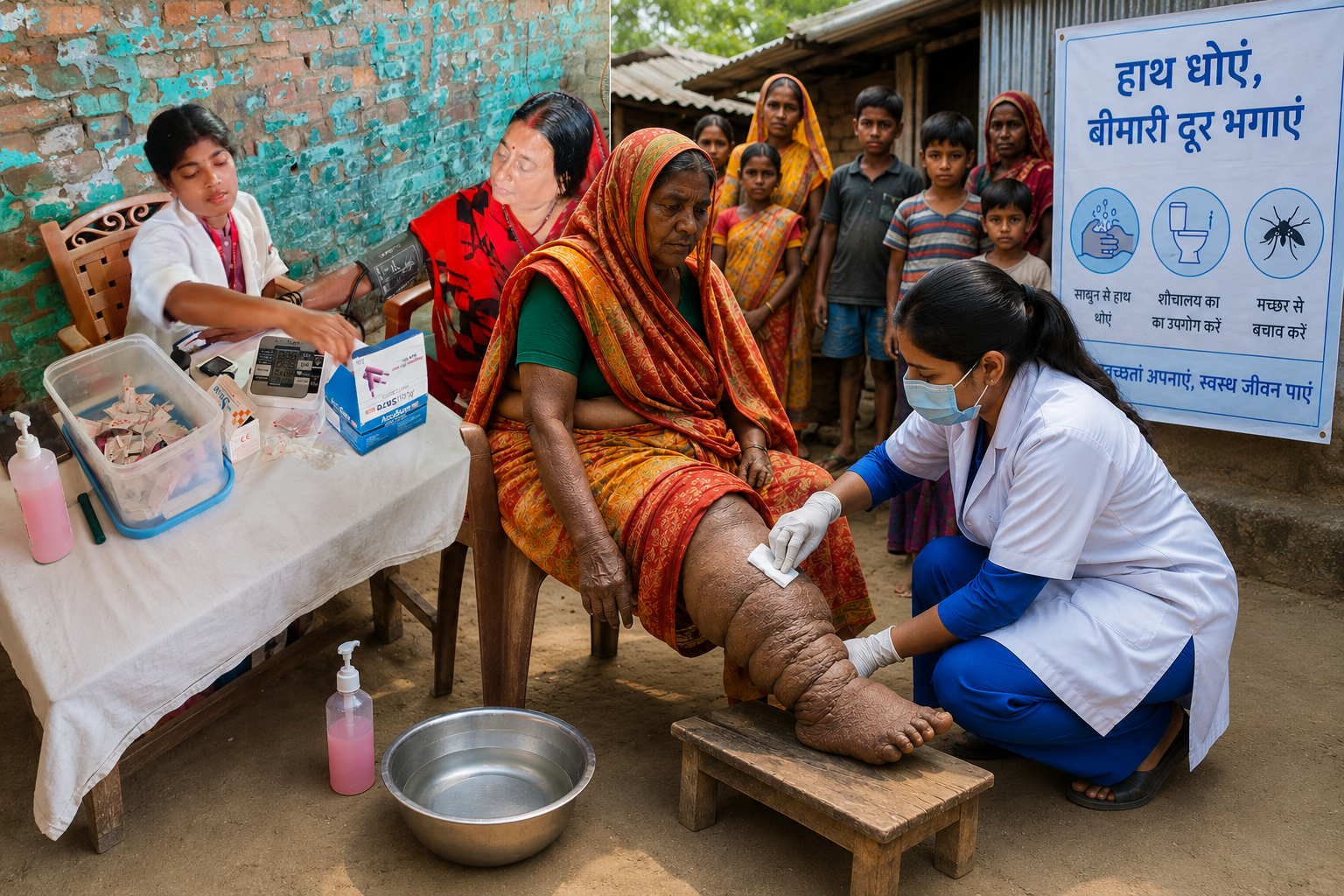
Public health programmes play an important role in promoting hygiene and preventing diseases. They improve sanitation facilities, spread awareness about hand washing, and encourage healthy habits. Proper hygiene helps prevent diarrhoea, pneumonia, and other infections. These programmes also educate communities about safe waste disposal and cleanliness, improving overall public health and quality of lif.
Elephantiasis, also known as lymphatic filariasis, is a disease spread by infected mosquitoes. It is caused by parasitic worms that damage the lymphatic system. The disease mainly affects people living in tropical and subtropical regions. It causes swelling in the legs, arms, breasts, or genital organs, and the skin may become thick and hard like an elephant’s skin. Common symptoms include pain, fever, chills, and discomfort. Doctors diagnose it through physical examination and blood tests. Treatment includes medicines such as diethylcarbamazine and ivermectin. Good hygiene, exercise, and proper care of swollen areas help reduce symptoms and improve comfort.